
Willkommen bei
the Business Biker blog

Throttle Control in Leadership Decisions (115)

There is a moment on every ride when the engine is ready, the road is open, and the only thing that changes the pace is your hand. Not the machine. Not the road. You.
Business works the same way.
Most companies believe their slowdowns live in operations. In systems. In teams. In tools. But more often than leaders want to admit, the real bottleneck sits at the top. Flow breaks when the person holding the throttle hesitates.
This is not about blame. It is about awareness. Because once you see it, you cannot unsee it. And once you understand it, you regain control.
Let us talk about executive throttle control.
The Machine Is Rarely the Problem
When a company slows down, the first reaction is almost always structural.
We need better processes.We need more meetings.We need new software.We need another layer of review. It feels responsible. It sounds rational. And sometimes it helps. But often, the machine is not the problem.
In well built companies, operations are surprisingly resilient. Teams know their work. Systems are stable. Communication flows well enough. Yet progress feels heavy. Decisions drag. Projects wait. Energy drops.
If you look closely, you will notice something subtle. Teams are not waiting for instructions. They are waiting for certainty. They are waiting for a clear signal from the top.
The devil’s advocate might say, “Surely complexity is the cause. Markets are uncertain. Regulation changes. Customers shift.” And yes, that is true. The environment moves fast.
But complexity does not slow companies as much as hesitation does.
When leaders delay decisions because they want more data, more consensus, or more safety, the entire organization feels it. Not as drama. Not as chaos. But as friction. And friction kills flow.
How Hesitation Shows Up in Organizations
Hesitation rarely looks like fear. It looks like caution. It shows up as:
We will revisit this next week.Let us gather more input.Let us run one more analysis.Let us align once more.
None of these are wrong on their own. In fact, they sound wise.
The problem is not the action. The problem is the pattern.
When leaders repeatedly postpone clarity, people begin to adjust their behavior. They stop pushing. They lower expectations. They hedge their own decisions because they sense uncertainty at the top.
Over time, something dangerous happens. Ownership shifts downward, but authority remains stuck upward. Teams take on responsibility without the power to move. Leaders hold authority without making clean calls.
The result is subtle stagnation.
From the outside, the company still functions. Revenue may even grow. But internally, momentum feels uneven. Meetings get longer. Discussions circle. Decisions reopen.
It is like rolling off the throttle just slightly. Not enough to stop. Just enough to lose rhythm. And rhythm is everything in performance.

Throttle Control and Executive Clarity
On a motorcycle, throttle control is not about speed. It is about smoothness.
You do not snap it open and closed. You modulate. You feel the engine. You sense traction. You respond in real time. Smooth input creates smooth output.
Leadership works the same way.
Executive clarity is not about being fast at all costs. It is about being deliberate and decisive. It is about knowing when to accelerate, when to hold, and when to ease. Most leaders believe they need more process to fix slowdowns. In reality, they often need sharper internal alignment.
Ask yourself a few uncomfortable questions:
Am I clear about the direction, or am I still negotiating with myself?
Do I truly stand behind this decision, or am I hoping it will resolve itself?
Am I asking for more data because I need it, or because I want protection?
The devil’s advocate might push back: “But responsible leaders must minimize risk.” Absolutely. Risk management matters. Yet over managing risk often creates a new risk: loss of momentum.
When leaders wait for certainty, they forget a simple truth. Certainty rarely arrives before movement. It arrives after commitment.
Throttle control means trusting your judgment once enough information is present. Not perfect information. Enough. Clarity at the top removes invisible drag throughout the organization.
The Hidden Cost of Executive Delay
There is a cost to hesitation that never appears on financial statements. It shows up in energy.
High performers feel it first. They notice when decisions drift. They sense when conversations repeat. They feel when leadership wavers. And high performers do not stay long in environments that lack clear direction.
Another cost is cognitive load.
When decisions remain open, they occupy mental space. Leaders carry unresolved issues longer than necessary. Teams keep background awareness on topics that should be closed. Attention fragments.
It is similar to having too many browser tabs open. None of them crash the system alone. Together, they slow everything down.
The devil’s advocate might argue that keeping options open preserves flexibility. Sometimes it does. But often, it creates ambiguity. And ambiguity spreads faster than clarity.
If your team cannot predict how you will decide, they hesitate too. They escalate more questions upward. They seek validation. They delay their own calls.
Suddenly, everything funnels to one place: You.
The very leader who hesitated to protect the organization becomes the single point of congestion. That is not a systems issue. That is a throttle issue.

Awareness Before Process
When companies hit slowdowns, consultants are often invited to redesign workflows. There is nothing wrong with that. External perspective can help. But sometimes the most effective intervention is simpler.
A leader sits down and reflects.
Where am I the bottleneck?
Which decisions have I kept open too long?
Where am I signaling uncertainty without realizing it?
This is uncomfortable work. It requires humility. It requires honesty. It also requires courage. Because once you see that you are the friction point, you cannot hide behind complexity anymore.
The devil’s advocate might say, “That sounds overly simplistic. Surely organizations are more complex than one person’s clarity.” Yes, they are.
But executive behavior cascades. When leaders speak with conviction, teams relax. When leaders close loops cleanly, teams move faster. When leaders admit uncertainty openly but still choose, teams trust the direction.
Awareness does not replace process. It sharpens it. Before adding structure, examine signal quality. Is the throttle steady?
Restoring Momentum Without Overengineering
Momentum does not return through more dashboards alone. It returns when direction feels solid.
There are practical ways to restore flow:
First, shorten decision cycles. Not by rushing, but by defining clear time boundaries. If an issue has enough data, decide. If it does not, define what “enough” means.
Second, communicate decisions cleanly. Not as tentative suggestions. As commitments. Even if they are reversible.
Third, separate reflection from hesitation. Take space to think. But once thinking is done, act.
Fourth, close loops visibly. When a decision is final, mark it as such. This reduces cognitive load across the team.
The devil’s advocate may warn, “Too much decisiveness risks arrogance.” True. Decisiveness without listening becomes dictatorship. But decisiveness after listening becomes leadership.
There is a difference. Throttle control is not about speed. It is about smooth power delivery. Too abrupt, and you lose traction. Too hesitant, and you lose drive. The art lies in modulation.
Executive Self-Trust and Organizational Trust
At the core of hesitation often sits self doubt. Leaders rarely admit this openly. They have titles. They have experience. They have track records.
Yet inside, they may question:
What if I am wrong?
What if the board disagrees?
What if the market shifts?
These are valid concerns. But teams do not need perfect leaders. They need steady ones.
Self trust at the executive level translates into trust within the organization. When leaders demonstrate that they can decide, adjust, and own outcomes, people follow. When leaders second guess publicly or reopen settled topics repeatedly, trust erodes.
The devil’s advocate might challenge, “Isn’t humility about revisiting decisions?” Yes. But revisiting is different from wobbling.
Revisiting means new information has changed the context. Wobbling means discomfort has changed your stance. Organizations can handle correction. They struggle with inconsistency.
Throttle control requires internal stability. That stability does not come from certainty about the future. It comes from clarity about principles.
What do we stand for?
What do we prioritize?
What trade offs are we willing to accept?
When those are clear, decisions accelerate naturally.

Action Plan for Executive Flow
Momentum is rarely restored by one dramatic move. It returns through disciplined small shifts. The following steps are not complex. They are demanding. They require self awareness and consistency.
1. Conduct a Bottleneck Audit. List the key initiatives currently waiting on you. Identify which decisions are genuinely data dependent and which are emotionally delayed. Choose one to close within 48 hours.
2. Define Your “Enough Data” Rule. Clarify what minimum information is required before you decide. Share this standard with your leadership team so expectations align.
3. Close Loops Publicly. When a decision is final, communicate it clearly and mark it closed. This reduces background cognitive load across the organization.
4. Separate Reflection Time from Execution Time. Block space for thinking. Once that window closes, move into action mode. Avoid blending endless analysis with half hearted execution.
5. Model Decisive Correction. If a decision proves wrong, adjust without drama. Show that decisiveness and adaptability can coexist.
These steps are simple in writing. They are powerful in practice. They shift the leader from unconscious bottleneck to conscious flow regulator.
Closing Thoughts
In business, we often look outward when momentum drops. We examine markets, competitors, systems, and structures. All of that matters.
But sometimes the most honest question is quieter. Am I holding the throttle steady?
Companies do not stall because engines fail. They stall because input becomes inconsistent. Executive clarity is not loud. It is not flashy. It is steady. It is deliberate. It creates confidence without theatrics.
The devil’s advocate will always remind you that complexity is real. And it is. But complexity does not remove responsibility. Flow begins where decisions are made. If you lead, you modulate the power.
Choose to do it consciously.
Fred, Jessi & iFred - On the Road for You
Fred, Jessi & iFred. On the road, living free and sharing our adventures. Fred rides, Jessi carries, and iFred connects the stories.
This time, our journey taught us about executive clarity and throttle control in leadership, powered by the freedom from My Easy Side Business.

updates
updates


Social Media


Business

warum ich fahre & schreibe

Schreib mir einen Text

Empfohlene Artikel








vom YouTube kanal

meine Empfehlungen
Smarte business Lösungen
Dieser Blog bringt spezifische Business-Impulse aus der Praxis der Bottleneck Flow Strategy (BFS). Kein Standardwissen. Themen, die deinen echten Wachstumsengpass treffen und dein Business nach vorne bringen.
The Business Biker Money (BBM) zeigt, wie du mit Gesundheit einen Einkommensstrom aufbaust, der wirklich zu deinem Leben passt. Mehr Freiheit statt mehr Arbeit. Gesund, entspannt und mit Fahrwind im Rücken.
Bottleneck Flow Strategy
Die BFS macht sichtbar, was dein Wachstum wirklich blockiert. Nicht Symptome behandeln, sondern den Engpass im System finden. Lösung entwickeln. Wirkung messen. Dann den nächsten Engpass angehen.
The Business Biker Money
Gesundheit trifft Bikermentalität. BBM zeigt dir, wie du mit echten, gesunden Produkten ein zweites Standbein aufbaust. Kein Hype, kein Druck. Ein klares Konzept und ein solides Stück mehr Freiheit im Leben.
Brainfood für Business und bike
Engpass auflösen

sales im flow
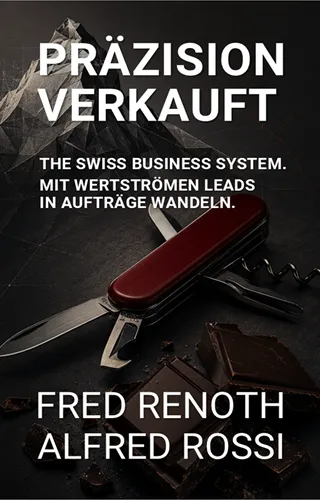
Energie tanken

Business aufbauen

Gelassen führen

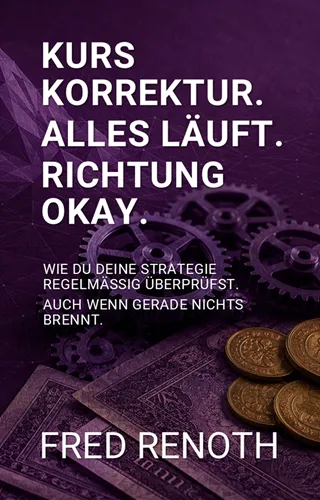
Strategie REview
Wachstum stockt nicht wegen fehlendem Einsatz. Es stockt, weil der eine Engpass im System nicht gefunden wurde.
Gleiches oder besseres Ergebnis. 91 % weniger Kosten und Zeit. Finde den Engpass, der deinen Vertrieb wirklich bremst.
Fred kämpft mit Nachmittagstiefs auf langen Etappen. Bis Cornelia ihm zeigt, wie Ernährung und Training wirklich helfen.
Kanada bis Panama: Fred und Julia bauen unterwegs ihr Business auf, meistern Grenzen, Visa und eine echte Beziehungskrise.
Korsika, Kreta, Zypern: Fred und Julia reifen als Unternehmer und Paar. Gelassener, genussvoller, mit Blick auf Spanien.
Es läuft gut bei dir? Genau dann prüft niemand mehr, ob die Richtung noch stimmt. Zeit für eine bewusste Kurskorrektur.
auf das Bild Klicken und dein buch sofort sichern
Haftungsausschluss
Die Tipps und Infos, die Sysbizz LLC auf und www.BizBiker.com zeigt, basieren auf unseren eigenen Erfahrungen und unabhängigen Recherchen. Wir übernehmen keine Haftung für irgendwelche Folgen, Verletzungen oder Schäden, die durch die Nutzung der genannten Produkte oder Infos entstehen könnten.
Einige Inhalte, auf die wir in unseren Blog-Artikeln verweisen, stammen von externen Quellen und werden zur Information gezeigt. Sysbizz LLC erstellt, kontrolliert oder überprüft diese externen Inhalte nicht und ist nicht für deren Richtigkeit, Vollständigkeit oder die darin geäußerten Meinungen verantwortlich.
Die Links auf dieser Seite können Affiliate-Links sein. Wir können eine Provision für Käufe über diese Links bekommen, ohne dass dir zusätzliche Kosten entstehen.