
Willkommen bei
the Business Biker blog

The Transactional Value of Business Sparring (113)

B2B leaders are not allergic to emotion. They feel pressure, pride, doubt, and relief like everyone else. The difference is what they do next. They translate feelings into decisions, and decisions into outcomes. In a B2B business, outcomes are measured in cash, time, risk, and reputation. That is why most leaders do not buy inspiration. They buy clarity that turns into action, and action that turns into results.
That is also why business sparring lands so well with fact-based decision makers. It is not a motivational talk. It is not a cozy coaching relationship. It is not a consulting project with slide decks and implementation plans. It is a transactional exchange: you invest time and money, you receive sharper thinking, faster decisions, cleaner execution, and measurable business impact. If the value does not show up in hard terms, a rational buyer will walk away - and they should.
This article is about that hard value. We will start with the “soft results” leaders often dismiss, then move into the three big value drivers that show up on any serious scorecard: speed, quality, and team motivation. And all the way through, we will keep the devil’s advocate in the room, asking the uncomfortable questions that protect you from self-deception.
Why B2B Buyers Ask for Proof
If you sell to businesses, you know the scene. A leader listens politely, asks a few questions, and then their face changes. It becomes the face of accountability. They are no longer thinking about whether your offer sounds good. They are thinking about whether they can justify it.
They have to explain the decision upward, sideways, and downward. To owners, board members, partners, and teams. They have to defend it in numbers, not in vibes. Even when a leader buys something because it feels right, the next sentence is still a calculation. What does it do for revenue? What does it reduce in cost? What risk does it remove? What does it protect?
Business sparring fits that mindset because it is designed for decisions, not for comfort. It is a place where a leader can bring messy reality and leave with clean next steps.
But the devil’s advocate interrupts here: if sparring is so useful, why do some leaders still hesitate to invest?
Because clarity feels like a luxury when you are busy. It feels like something you do later. And later is where many businesses lose money - slowly, quietly, and consistently.
The Soft Results That Quietly Change Everything
Let’s talk about the soft results first, because they are often the start of the hard ones.
Most CEOs and leaders live with a constant low-level signal in the background. A list of open loops. Unfinished decisions. Unspoken conflicts. Projects that should move but do not. Numbers that look fine but not solid. People that work but do not click. It is not always loud stress. It is more like cognitive noise.
Over time, that noise changes how you function. You start waking up early, but not refreshed. You sit down to work, but your mind keeps switching tabs. You push through the day, but the evening does not fully reset you. You are productive, but not clear. You keep moving, but you do not feel clean momentum.
This is where time management, sleep, and anxiety levels come into play. They are not personal wellness topics in a B2B context. They are performance variables.
A leader with lower anxiety sees more options.
A leader with stable sleep makes better decisions.
A leader with clean time boundaries protects strategic work instead of living in reactive fire mode.
The devil’s advocate question is sharp: are these soft results just nice-to-have, or are they the real root cause of your business friction?
In many cases, they are the root. Not because the leader is weak, but because the leader is human. If your cognitive bandwidth is clogged, your business will show it. Sparring clears bandwidth by creating a space where the mind can finally finish the sentence.

Speed: The Value of Quicker Decisions
Speed is the first hard metric that changes when leaders work in sparring mode. Not speed as in work faster. Speed as in decide sooner.
A decision delay is not neutral. It creates a vacuum, and vacuums get filled. People guess. Teams interpret. Projects drift. Costs keep running. And competitors do not pause.
Every business has its own speed equation.
In a manufacturing company, a delayed investment decision might hold back capacity expansion. That delay can mean lost orders or overtime costs. In a SaaS company, a delayed positioning decision might slow down marketing and reduce pipeline quality. In a service business, delayed hiring decisions can overload key people, increase errors, and damage customer experience.
The value is not only in moving faster. It is in moving sooner. A decision made today does not just change today. It pulls forward a chain of outcomes.
This is where a practical calculation helps. Ask yourself: If we accelerate this decision by two weeks, what happens?
Do we invoice earlier?
Do we avoid a penalty?
Do we stop paying for rework?
Do we capture demand that is currently waiting?
The devil’s advocate pushes harder: is your delay actually thoughtful caution, or is it avoidance dressed as responsibility?
Many leaders believe they are delaying because they are careful. Sometimes that is true. But often the delay is caused by internal conflict. Two priorities fighting. Two stakeholders pulling. Two fears competing.
Sparring reduces that conflict by forcing the decision into clear structure: what matters most, what risks are real, what assumptions are untested, and what is the next irreversible step.
When you decide sooner, you get feedback sooner. You learn sooner. You correct sooner. Speed creates learning, and learning creates advantage.
Quality: Indecision Makes Processes Fragile
Quality is usually treated as an operational topic. But in many companies, quality problems start one layer above operations.
When leadership decisions are unclear, processes become fragile. Teams do not know what good means today. They do not know whether they should optimize for speed, cost, customer experience, or risk reduction. So they do what humans do: they choose the safest interpretation for themselves.
That is how inconsistencies appear. One team follows the old standard. Another team follows the new direction. A third team does a hybrid. Nobody is malicious. Everybody is trying to help. But the system becomes messy.
The cost shows up in lost hours, wasted materials, and increased error rates. In physical products, it can show up in defects and returns. In B2B services, it shows up in rework, client escalation, and damaged trust. In regulated industries, it can show up in compliance issues that become expensive quickly.
How many claims were settled?
A company can calculate these costs.
How many customer credits were issued?
How many hours went into rework last month?
How many projects slipped because people had to fix avoidable mistakes?
The devil’s advocate asks: if quality is so important, why is it so often sacrificed during uncertainty?
Because uncertainty is tiring. When leaders do not decide, teams compensate by improvising. Improvisation can be creative, but it is rarely consistent.
Sparring supports quality by stabilizing leadership decisions before they cascade into execution. It also improves the quality of the decision itself. In sparring, you test assumptions. You pressure-test the logic. You look for the blind spot that does not show up in spreadsheets.
That is not soft. That is risk management. A clean decision is a quality decision. It reduces ambiguity, and ambiguity is where quality goes to die.
Team Motivation: The Most Expensive Invisible Loss
Team motivation is often described in emotional language. Engagement. Culture. Morale. But motivation is also a financial variable.
A team that is unclear does not work at full capacity. People still show up. Tasks still get done. But discretionary effort disappears. Ownership shrinks. Initiative fades. Small delays become normal. People stop making decisions and start asking for permission.
That is the quiet death of performance.
Here is the transactional view. If a team performs at 80 percent instead of 100 percent, you are paying full staff costs for partial output. The difference is not theoretical. It is a measurable loss.
Let’s use the simple model. Staff costs times 20 percent.
In a company with $1,000,000 in annual personnel cost, 20 percent is $200,000 in wasted capacity.
In a company with $5,000,000 in personnel cost, 20 percent is $1,000,000.
You do not need a complicated ROI model to see the problem.
The devil’s advocate interrupts again: are you sure your team is at 80 percent because of motivation, and not because of skill?
Skill matters, but motivation is often the first lever. And motivation is tightly connected to clarity.
Teams can handle hard work. They can handle high standards. They can even handle pressure. What they struggle with is unclear direction and constant priority shifts that feel random.
Business sparring improves motivation by restoring clarity at the top.
When leaders communicate decisions cleanly, teams stop guessing.
When leaders align priorities, teams regain a sense of progress.
When leaders reduce open loops, teams stop bracing.
People do not need daily cheerleading. They need a clear definition of success and a stable plan to reach it.

What Business Sparring Is - And What It Is Not
To keep this practical, let’s draw clean lines. Business sparring is not coaching. Coaching often focuses on personal development, behavior, and long-term growth patterns. That can be valuable, but it is not always what a B2B leader needs in the middle of a decision storm.
Business sparring is not consulting. Consulting often brings external expertise, analysis, and recommendations. Again, valuable - but many leaders already have expertise in the room. What they lack is decision clarity and the ability to cut through noise.
Business sparring is a structured thinking partnership. It is a place where the leader’s reality is challenged, organized, and translated into action. It is direct. It is specific. It is designed for movement.
The devil’s advocate asks: isn’t this just talking? It is talking with a purpose and a method. There is a difference between talking in circles and talking toward a decision. Sparring creates the conditions where a leader can do the most profitable thing they rarely schedule: think clearly.
How to Make the Transactional Value Visible.
If you want to evaluate sparring like a B2B buyer, you need a simple way to make value visible. Here is a practical approach.
First, identify the decision or project that is stuck. Then attach numbers to the delay. Revenue delayed, costs increased, risk exposure, quality losses, staff overload, or opportunity cost.
Second, define what faster means. Is it two weeks? One month? One quarter? Then estimate what acceleration would change.
Third, define what better quality means. Less rework? Fewer defects? Fewer escalations? More consistent throughput?
Fourth, define what higher motivation means. Less turnover? Better output? More initiative? Fewer meetings that exist only because nobody decides?
You do not need perfect accuracy. You need directionally honest numbers.
The devil’s advocate question is essential: are you using these numbers to learn, or to justify a decision you already want to make?
If it is the second, stop. Sparring is not there to help you win arguments. It is there to help you make better choices.

The Transactional Model in One Sentence
If you strip it down, the transactional model of business sparring is simple.
Sparring reduces decision friction. Reduced friction increases decision speed. Faster decisions protect quality and improve team performance. Those changes show up in revenue, cost, and risk.
That is why rational B2B buyers understand it quickly. It is not magic. It is leverage.
5-Point Action Plan
Before the five takeaways, one short reminder. This only works if you treat clarity like a business asset, not like a mood. The goal is not to feel better. The goal is to run the business better, and to measure what changes.
1. Put one delayed decision on the table. Choose the decision you have been postponing the longest. Write it as a simple sentence. If you cannot write it simply, that is already the problem.
2. Calculate the cost of waiting. Estimate what one week and one month of delay costs. Include revenue delay, rework, quality risk, and staff overload. Use ranges if needed, but do not skip the step.
3. Define the next irreversible step. Most decisions do not need full commitment today. They need the next real step. Define the step that creates learning or locks in progress.
4. Communicate one clear priority to your team. Pick one priority that will not change this week. State what success looks like. Remove one competing priority, even temporarily, to create focus.
5. Review the impact after 14 days. Two weeks is enough to see movement. Check what improved in speed, quality, and team motivation. If nothing changed, ask why. Was the decision real? Was it communicated? Did execution match intent?
Closing the action plan, here is the point many leaders miss. Clarity is not a one-time event. It is a cadence. When you build a habit of clean decisions and clean communication, the business becomes lighter. Not easier, but less noisy. And in B2B, less noise is often the most profitable advantage you can create.
Closing Thoughts
Business sparring is valuable because it respects how real business decisions are made. It does not ask a leader to become someone else. It helps them use what they already have - experience, responsibility, instinct, and discipline - with less friction and more precision.
If you are a fact-based decision maker, you do not need hype. You need proof. The proof is in the numbers that move when clarity returns: decisions accelerate, quality stabilizes, and teams perform closer to their true potential. That is transactional value in the clearest sense - cold, hard cash, created by clear, hard thinking.
Fred, Jessi & iFred - On the Road for You
Fred, Jessi & iFred. On the road, living free and sharing our adventures. Fred rides, Jessi carries, and iFred connects the stories.
This time, our journey taught us about transactional clarity and measurable ROI through business sparring, powered by the freedom from My Easy Side Business.

updates
updates


Social Media


Business

warum ich fahre & schreibe

Schreib mir einen Text

Empfohlene Artikel








vom YouTube kanal

meine Empfehlungen
Smarte business Lösungen
Dieser Blog bringt spezifische Business-Impulse aus der Praxis der Bottleneck Flow Strategy (BFS). Kein Standardwissen. Themen, die deinen echten Wachstumsengpass treffen und dein Business nach vorne bringen.
The Business Biker Money (BBM) zeigt, wie du mit Gesundheit einen Einkommensstrom aufbaust, der wirklich zu deinem Leben passt. Mehr Freiheit statt mehr Arbeit. Gesund, entspannt und mit Fahrwind im Rücken.
Bottleneck Flow Strategy
Die BFS macht sichtbar, was dein Wachstum wirklich blockiert. Nicht Symptome behandeln, sondern den Engpass im System finden. Lösung entwickeln. Wirkung messen. Dann den nächsten Engpass angehen.
The Business Biker Money
Gesundheit trifft Bikermentalität. BBM zeigt dir, wie du mit echten, gesunden Produkten ein zweites Standbein aufbaust. Kein Hype, kein Druck. Ein klares Konzept und ein solides Stück mehr Freiheit im Leben.
Brainfood für Business und bike
Engpass auflösen

sales im flow
Energie tanken

Business aufbauen

Gelassen führen

Strategie REview
Wachstum stockt nicht wegen fehlendem Einsatz. Es stockt, weil der eine Engpass im System nicht gefunden wurde.
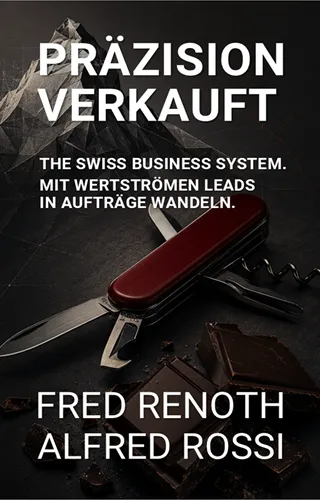
Gleiches oder besseres Ergebnis. 91 % weniger Kosten und Zeit. Finde den Engpass, der deinen Vertrieb wirklich bremst.
Fred kämpft mit Nachmittagstiefs auf langen Etappen. Bis Cornelia ihm zeigt, wie Ernährung und Training wirklich helfen.
Kanada bis Panama: Fred und Julia bauen unterwegs ihr Business auf, meistern Grenzen, Visa und eine echte Beziehungskrise.
Korsika, Kreta, Zypern: Fred und Julia reifen als Unternehmer und Paar. Gelassener, genussvoller, mit Blick auf Spanien.
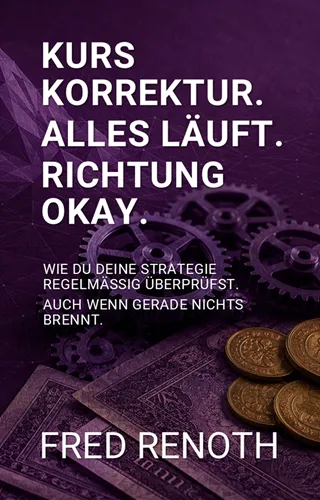
Es läuft gut bei dir? Genau dann prüft niemand mehr, ob die Richtung noch stimmt. Zeit für eine bewusste Kurskorrektur.
auf das Bild Klicken und dein buch sofort sichern
Haftungsausschluss
Die Tipps und Infos, die Sysbizz LLC auf und www.BizBiker.com zeigt, basieren auf unseren eigenen Erfahrungen und unabhängigen Recherchen. Wir übernehmen keine Haftung für irgendwelche Folgen, Verletzungen oder Schäden, die durch die Nutzung der genannten Produkte oder Infos entstehen könnten.
Einige Inhalte, auf die wir in unseren Blog-Artikeln verweisen, stammen von externen Quellen und werden zur Information gezeigt. Sysbizz LLC erstellt, kontrolliert oder überprüft diese externen Inhalte nicht und ist nicht für deren Richtigkeit, Vollständigkeit oder die darin geäußerten Meinungen verantwortlich.
Die Links auf dieser Seite können Affiliate-Links sein. Wir können eine Provision für Käufe über diese Links bekommen, ohne dass dir zusätzliche Kosten entstehen.